Private health insurance in Kansas
The real 2026–2027 numbers for Kansas, who qualifies for help, and when a private, medically-underwritten plan beats paying full Marketplace price — explained honestly by an agent licensed in Kansas.
The Kansas marketplace in 2026
Kansas shops on HealthCare.gov with six insurers for 2026 (Aetna exited; Medica leaves after 2026). Brace for the trend line: insurers filed a 24.2% average increase for 2027 — the steepest of all 30 states we serve — on top of a roughly 27% jump in 2026. That would take the average benchmark from $670 to about $832 in one year.
Kansas has not expanded Medicaid. KanCare keeps traditional limits, so low-income adults without children generally do not qualify, and a coverage gap exists below the poverty level. Above the 400% cliff, the back-to-back 25%-range increases land at full price with no cushion.
Where private plans fit in Kansas
No state we serve has a worse two-year price trajectory than Kansas. For healthy Wichita trades, western-Kansas farm and ranch families, and KC-area contractors above the cliff, getting an underwritten quote on file before the 2027 renewal is about as close to urgent as insurance shopping gets.
The honest tradeoff, same as everywhere: private plans use medical underwriting. They price on your age and health, which is exactly why healthy applicants often pay less — and why they are the wrong answer if you manage an ongoing condition, take costly prescriptions, are pregnant, or are mid-treatment. In those cases guaranteed-issue ACA coverage protects you in ways no underwritten plan can, and we will tell you so on the first call. Run your own subsidy numbers with our 2027 subsidy calculator or see how Kansas compares on the state premium map.
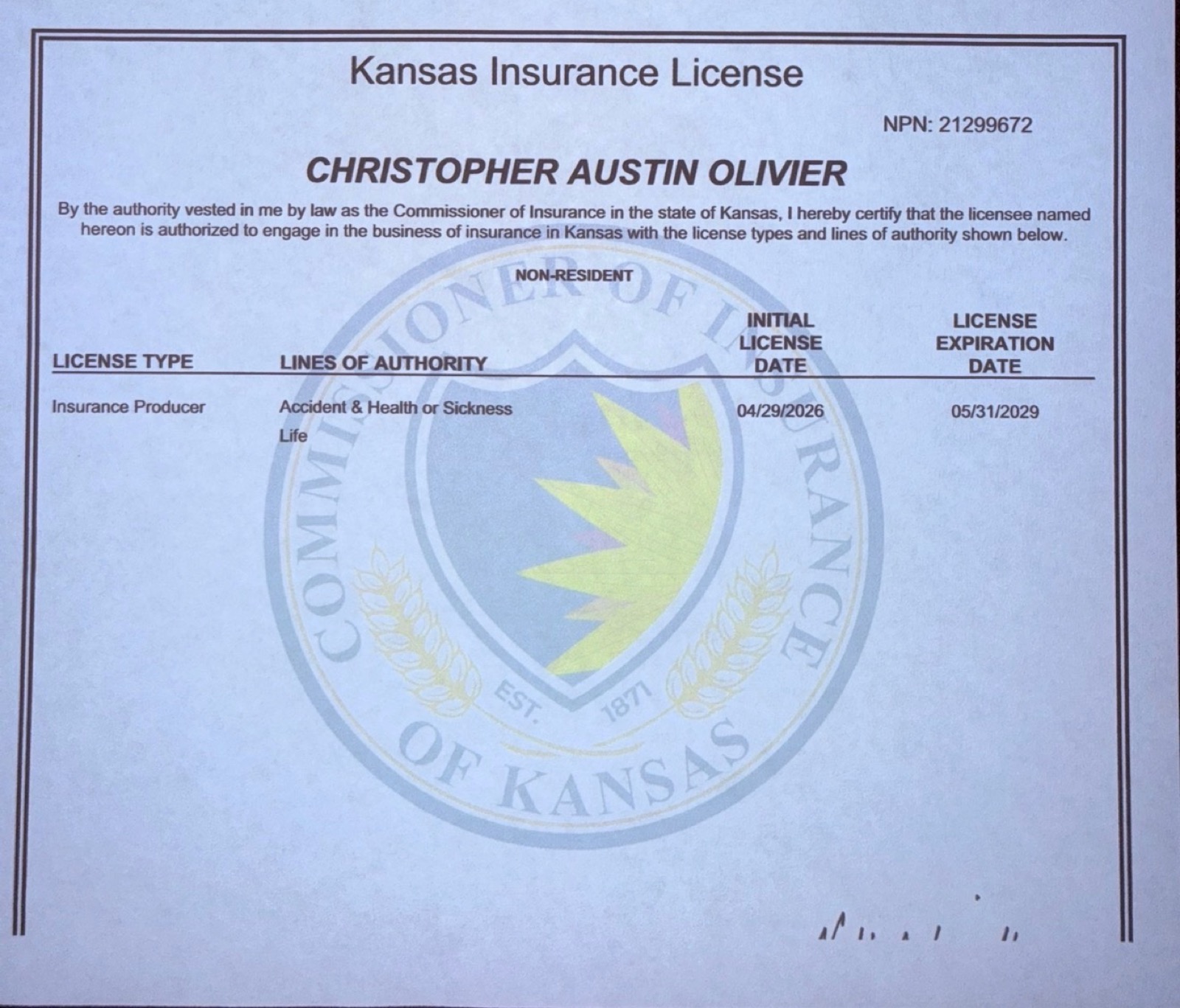
Christopher “Austin” Olivier is licensed in Kansas under NPN #21299672. Check it against state records through the Kansas Department of Insurance — official license lookup ↗ — or view every state license on our About page.
Kansas questions we hear most
Kansas's published 2026 benchmark averages $670 a month for a single 40-year-old (KFF) - and insurers filed a 24.2% average increase for 2027, the steepest of any state we serve, projecting around $832. Above the subsidy cliff that's all yours. Healthy Kansans should get an underwritten comparison before renewal.
Through the federal marketplace at HealthCare.gov. Open enrollment for 2027 opens November 1, 2026. Note Medica exits the Kansas marketplace after 2026.
No. KanCare keeps traditional eligibility limits, so many low-income adults fall in the coverage gap - no Medicaid, no subsidy. If your income is near the poverty line, get a careful eligibility read before assuming anything.
Yes. Christopher A. Olivier holds a Kansas insurance license (NPN #21299672). Verify it via the Kansas Department of Insurance licensing page at insurance.kansas.gov/licensing, and see the certificate posted on this page.
See your real Kansas options
Free 15-minute comparison with a Kansas-licensed advisor. No pressure, no obligation — and if the Marketplace is your better deal, we’ll say so.
Sources: KFF benchmark premium data ↗; healthinsurance.org Kansas marketplace guide ↗; CMS state marketplace list ↗; KFF Medicaid expansion tracker ↗. Educational content, not a quote or offer of coverage. Private plans are medically underwritten and typically exclude pre-existing conditions.